Discovering the churches of Farra
Places of faith and art that tell centuries of history and spirituality.
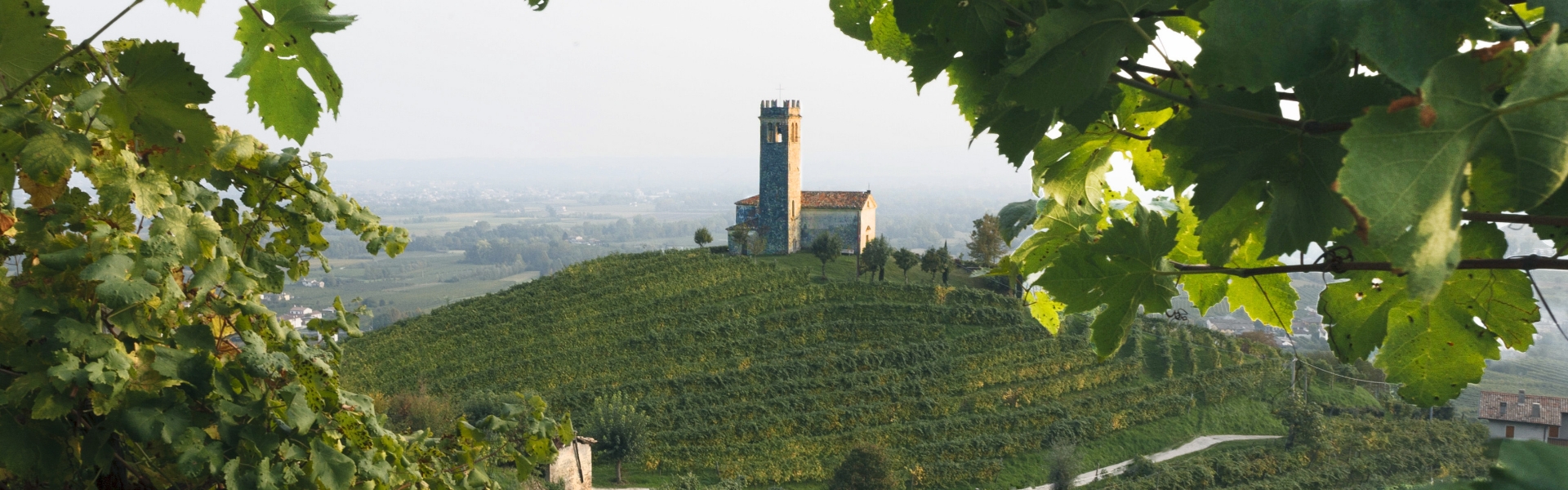
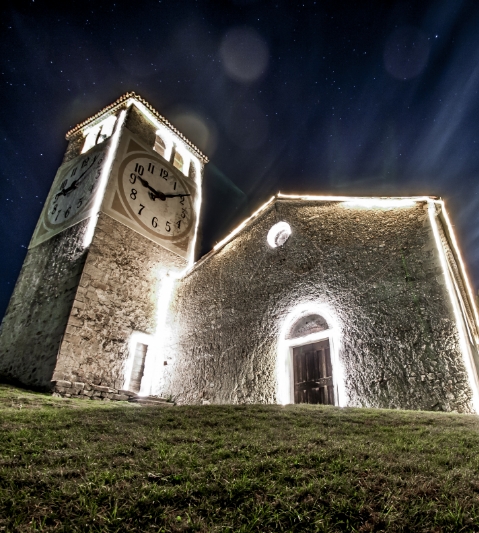
The churches of Farra di Soligo are true treasures of art and spirituality. The Parish Church of Santo Stefano has medieval origins and preserves 19th-century paintings, while the Church of San Vigilio, perched on Col San Martino, amazes with its Romanesque tower and monumental clock.
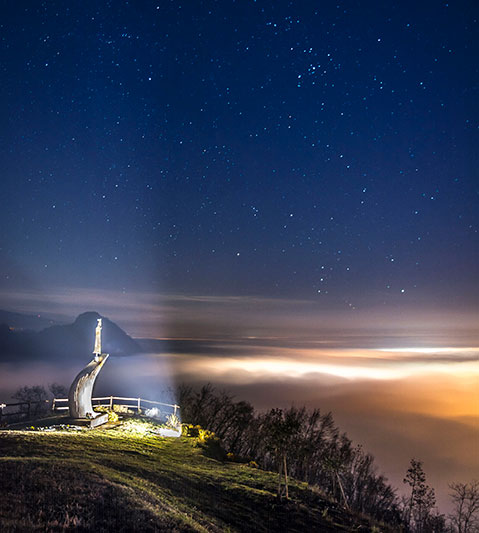
On the Hermitage of San Gallo, built on the remains of a 14th-century castle, stands the Christmas tree visible from the entire valley, a popular destination during the holidays. In Soligo, the Church of Saints Peter and Paul combines popular devotion with paintings by artists like Luca Giordano and Francesco da Milano, and houses an 18th-century organ. Finally, the small Santa Maria Nova offers peace and beauty with its 15th-century frescoes and wooden portico.
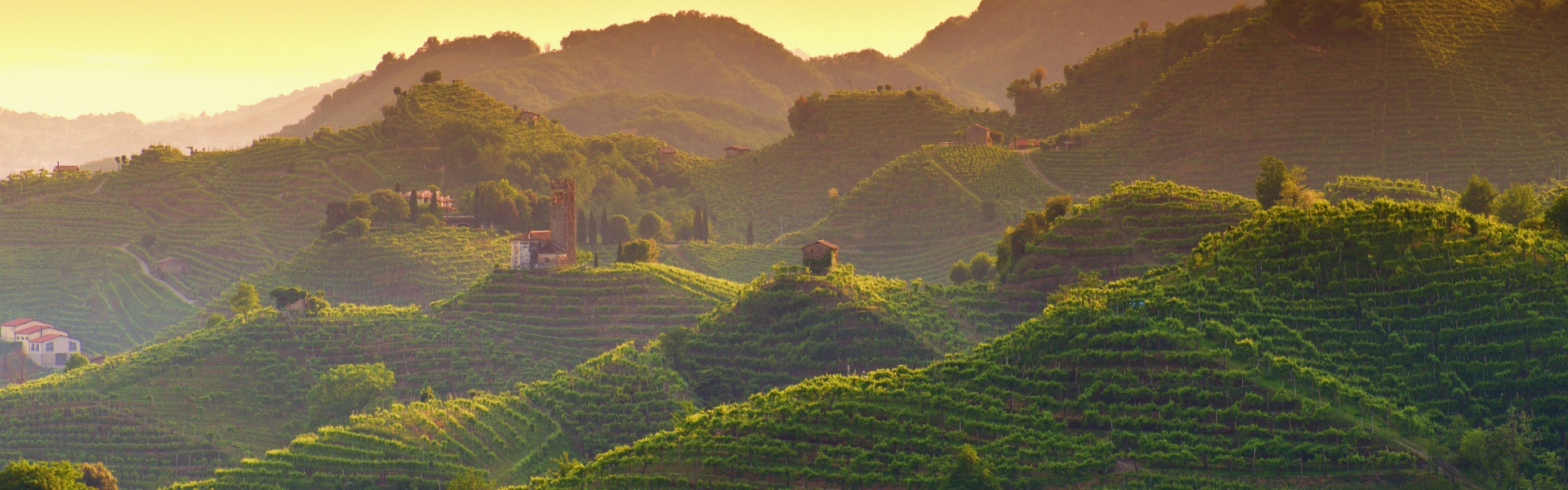
Together, these churches outline a spiritual and artistic journey in the heart of the Conegliano Valdobbiadene hills, combining faith, history, and landscape.
Discover the sacred gems of Farra di Soligo
Among ancient frescoes, bell towers rising among the hills, and silences full of history, the churches of Farra tell centuries of devotion and art. Small architectural jewels immersed in the landscape, guardians of timeless traditions and beauty. Let yourself be guided along a spiritual itinerary that touches the heart of the territory.
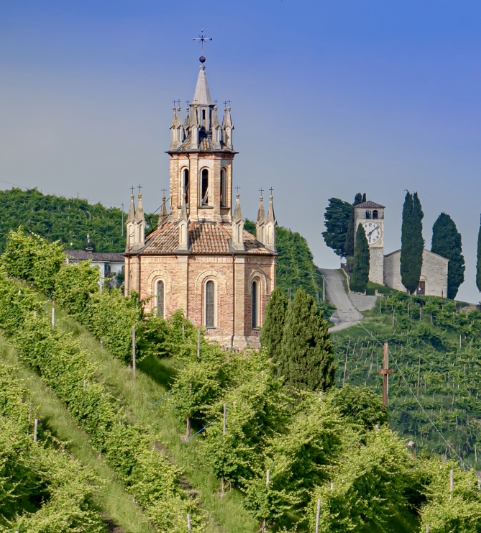
Little Church of San Martino and the Urn
The Romanesque oratory destroyed by Montello artillery in 1918 was replaced by the current octagonal church completed in 1927.
Here legend intertwines with Christian worship, as inside you’ll find the Urn of San Martino. According to ancient tradition, couples hoping for a child turn to the great Saint: they draw a name ticket from the urn, imploring the Saint’s protection for their unborn child. Requests for names and reports of received graces continue to arrive numerously today, keeping devotion to the Holy Bishop of Tours alive.
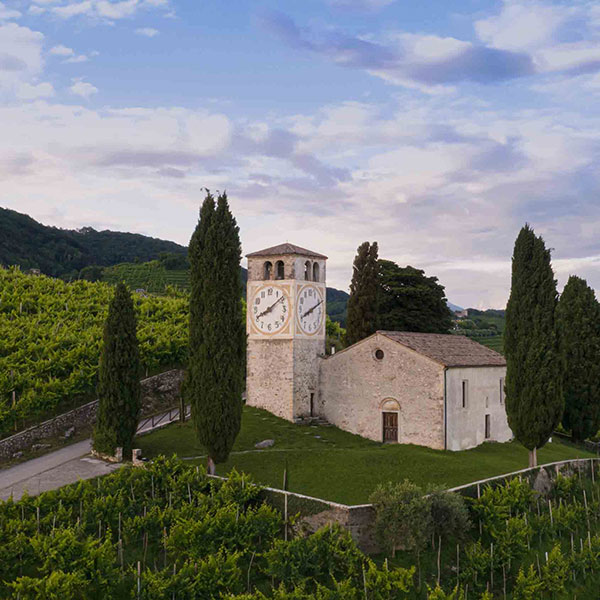
Oratory of San Vigilio
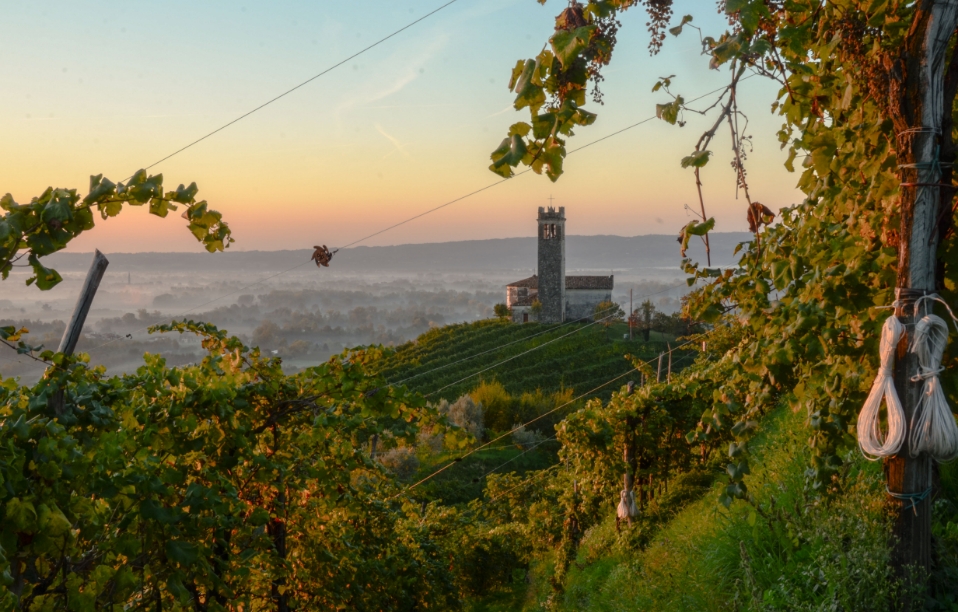
Located on the hilltop, it dates back to the 11th century and has been expanded and modified several times. In Carolingian Romanesque style, it’s dedicated to San Vigilio, a tireless shepherd who, during the 4th century, spread Christianity by converting the people of Trentino and Upper Veneto. It dominates the plain below with its unmistakable bell tower and preserves valuable 15th-century paintings inside. Along the south wall, you can admire three frescoes from 1458: Madonna with Child on throne and Saint Nicholas of Bari, Saints James and Bernardino of Siena, and Saint George slaying the dragon. The counter-facade features the image of Saint Bovo on horseback from 1459.
The main altar, dedicated to San Vigilio, is topped by a wooden bas-relief created by Stuflesser, a sculptor from Val Gardena.
Ancient Parish Church of Giussano
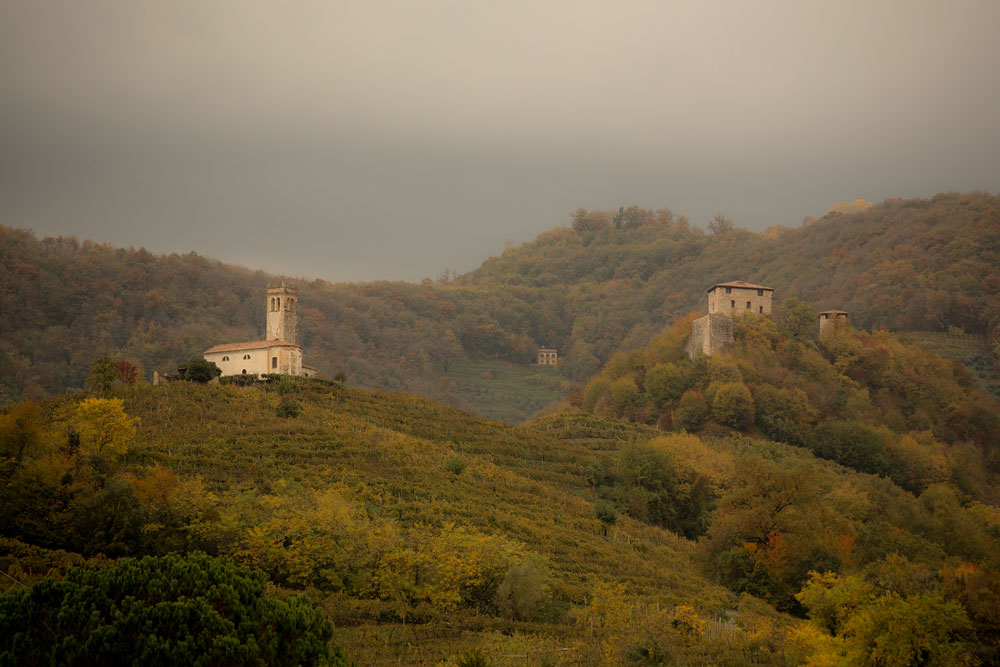
The recently restored bell tower is located south of Col San Martino’s settlement, near the cemetery, and dominates the surrounding countryside. It recalls the remains of the ancient Church of Giussano, an important Marian worship site from the Middle Ages until the early 1900s. The tower can be reached by walking along the “Avenue of Remembrance,” shaded by cypress trees that commemorate the number of Col San Martino soldiers who fell during the Great War.
Towers of Credazzo
To the west, towards Col San Martino, around the namesake hamlet, extended the feudal estate of Credazzo, the last remains of a fortification documented from 1233, built by the Da Camino family. This medieval fortress passed to the Collalto family about a century later until it was destroyed by the Hungarians in the 1400s and fell into ruins. The complex consists of three towers connected by a surrounding wall.
Church of San Lorenzo
Perched on the hills near the famous Credazzo Towers, it was originally the chapel of the nearby feudal castle. First mentioned in 1210, it’s still a place of worship, particularly for Rogations, propitiatory prayers linked to agricultural production and tradition.
In 1243, the marriage between Tolberto II and Agnese de’ Guidotti was celebrated in this small church. Their descendants would later unite with Gaia da Camino, the famous daughter of Gerardo da Camino, mentioned by Dante in Canto XVI of Purgatory.
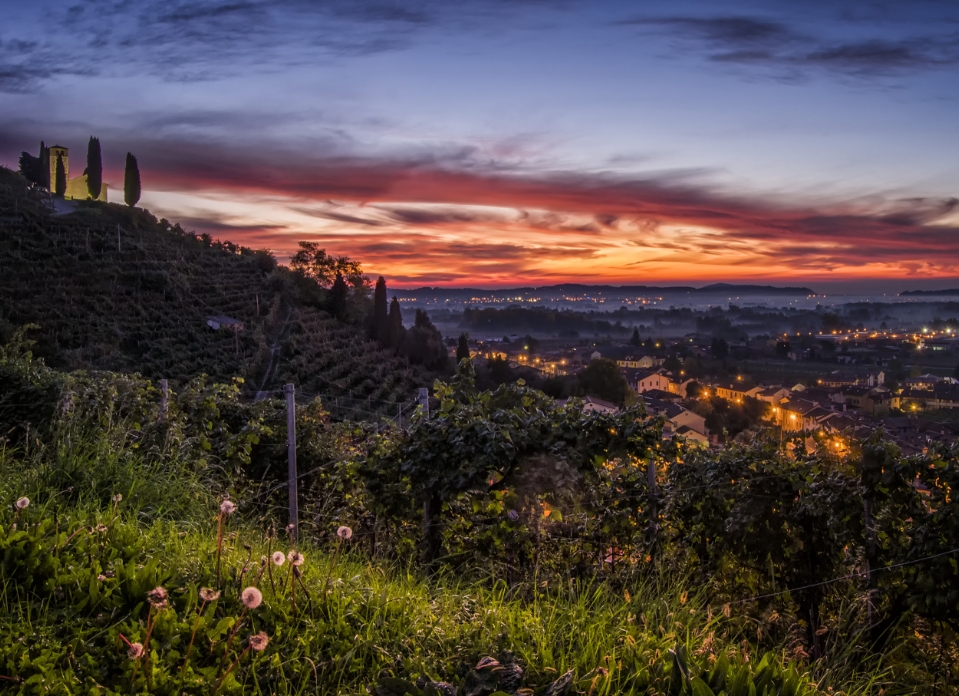
It offers an interesting observation point over the green hills of Conegliano Valdobbiadene Prosecco DOCG to the north and the plain to the south towards Montello.
Little Church of Madonna della Neve (dei Broi)
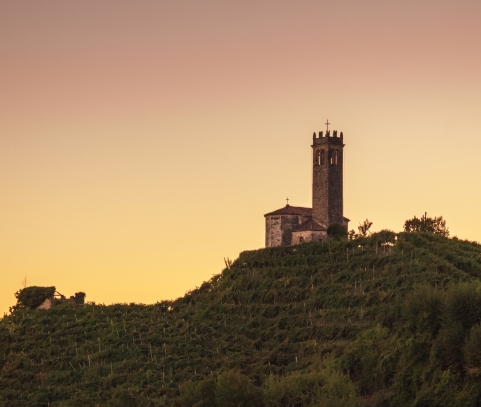
This small church located south of the town center dates back to before 1300 and has been a pilgrimage destination for centuries to pray for rain during droughts and to ensure abundant harvests. During enemy occupation, the building suffered numerous damages and was first used as a stable for Austro-Hungarian troops’ horses, then as a shelter for prisoners of war. A recent restoration has uncovered beautiful frescoes dating back to the early 14th century and moving traces of soldiers’ presence during the Great War.
Santo Stefano Auditorium
The former Church of Santo Stefano, dating back to the 12th century, features a single nave in Renaissance-Baroque style. Purchased by the Municipal Administration in 1987, it is now used as an Auditorium for meetings, gatherings, concerts, and as the venue for City Council meetings. The church of Santo Stefano contained numerous artworks, some transferred to the current parish church, others to the Diocesan Museum of Vittorio Veneto. Inside, it preserves some altar frescoes painted by Carlo Bevilacqua in 1824, while the main altar features the Martyrdom of Saint Stephen, a copy of the one in the parish church. On the presbytery walls, you can admire frescoes from the 16th century.
Hill of San Gallo
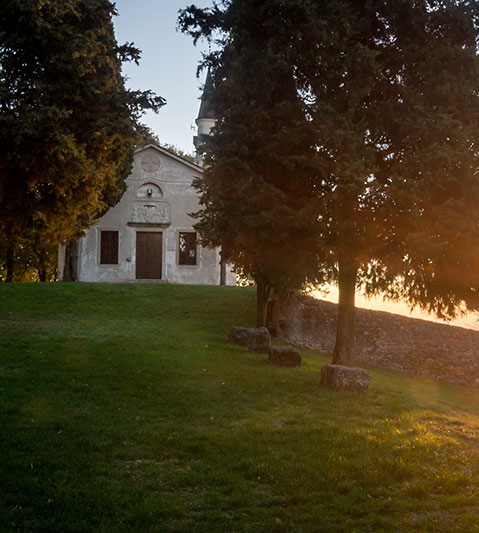
A cross at the beginning of the cypress-lined avenue leads to the Little Church of San Gallo, which overlooks Soligo from above. Once a place of retreat, the religious complex comprises a Romanesque church and an adjoining hostel that was once used by pilgrims. The oratory, likely built as a castle chapel, was first documented in a will from 1354. Inside, the church houses several works of historical and artistic interest, including a fresco depicting the Madonna with Saints Peter and Gallus dated 1442, and a 17th-century fresco of Saint Florian on the ceiling. From the hill, you can enjoy an enchanting view of the Quartier del Piave and the entire Treviso plain, which here seems to follow the course of the Piave River toward the sea.
Church of Santa Maria Nova
The “Chiesuola,” commissioned by nobleman Rizzardo da Camino after surviving the plague, preserves valuable frescoes attributed to the 15th-century Rimini School. During the Great War, a shell damaged the structure. Thanks to careful restoration work, various types of frescoes have been uncovered: an authentic art gallery where you can admire the most venerated saints for centuries in the rural communities of Alta Marca.
Discover the Prosecco hills of Conegliano and Valdobbiadene
Discover the Prosecco hills of Conegliano and Valdobbiadene